
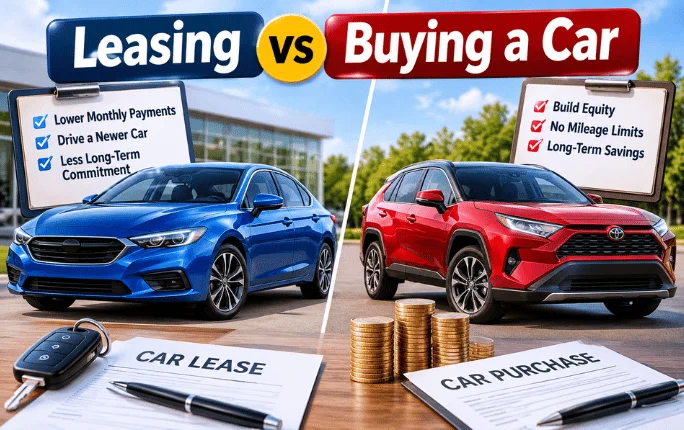
Choosing leasing vs buying affects more than your monthly payment. A lease can reduce short-term costs and keep you in newer vehicles. Buying usually offers more freedom and stronger long-term value once the loan ends.
Leasing generally suits drivers who value lower payments, newer vehicles, and predictable ownership periods. Buying often suits drivers who keep vehicles longer, drive more miles, or want equity. Your best choice depends on total costs, annual mileage, flexibility, and how long you expect to keep the vehicle.
Leasing vs Buying at a Glance
| Factor | Leasing | Buying |
|---|---|---|
| Ownership | You usually return the vehicle | You own it after paying the loan |
| Monthly payment | Usually lower | Usually higher |
| Mileage | Usually limited | No contractual mileage limit |
| Equity | Usually none | Builds as the loan balance falls |
| Vehicle changes | Easier every few years | Depends on selling or trading |
| Wear charges | Possible at lease-end | No contractual wear charge |
| Customization | Usually restricted | Generally allowed |
| Long-term payments | Continue if you keep leasing | Can end after loan payoff |
| Early exit | May be expensive | Vehicle can usually be sold or traded |
| Best fit | Short-term predictability | Long-term ownership |
What Is the Main Difference Between Leasing and Buying?
A lease lets you use a vehicle for an agreed period and mileage allowance. You normally return it when the contract ends. Some agreements also provide an option to purchase the vehicle.
Buying with financing works differently because each payment reduces a loan balance. Once that balance is paid, you own the vehicle outright. You can then keep, sell, or trade it without a lease contract limiting your choices.
The Consumer Financial Protection Bureau says typical vehicle leases last about two to four years. Many also limit annual mileage to roughly 10,000–15,000 miles. Going beyond the contract allowance can create additional charges.
Leasing vs Buying: Cost Comparison for U.S. Drivers
Monthly payments often make a lease look cheaper at first. You usually pay for expected depreciation during the contract, plus finance charges, taxes, and fees. A loan payment covers the vehicle’s full financed price over time.
Recent U.S. data shows that difference clearly. NerdWallet cites Experian data showing a \$617 average new-car lease payment in the second quarter of 2026. The average new-car loan payment was \$765 during the same period.
That \$148 monthly gap matters for a household budget. Still, monthly cost alone can produce a misleading comparison. Buyers may eventually reach years without a vehicle payment, while repeat lessees continue entering new contracts.
A Simple Long-Term Cost Example
Suppose one driver leases a vehicle every three years. Another finances a vehicle and keeps it several years after payoff. The buyer may spend more monthly at first but later enjoys payment-free ownership.
The lessee may avoid some older-car repair costs during those same years. They also continue paying for access to newer vehicles. This difference explains why the cheaper monthly option isn’t automatically the cheaper long-term choice.
Consumer Reports generally finds buying more economical over longer ownership periods. Its 2026 analysis also notes that leasing can offer lower payments and predictable driving during the warranty period. Your ownership timeline therefore matters as much as the advertised payment.
When Leasing a Car Can Make More Sense
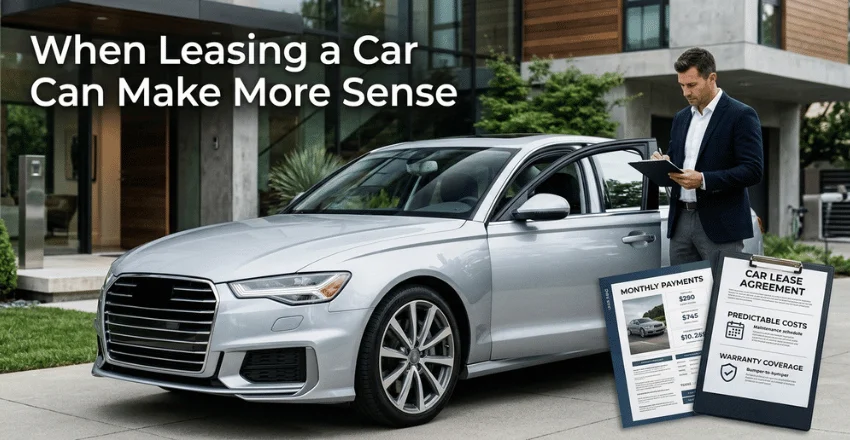
A lease can work well when your driving habits are predictable. It can also suit people who prefer changing vehicles every few years. The arrangement can reduce uncertainty about an aging vehicle’s repair needs.
Leasing may be worth considering when:
* You want a lower monthly payment on a comparable new vehicle. * You drive fewer miles than your contract allowance. * You prefer changing vehicles every two to four years. * You value having a vehicle covered by its factory warranty. * You don’t want to manage a private sale later. * You can maintain the vehicle within required wear standards.
Drivers considering a newer or more expensive vehicle should also budget for insurance. Coverage prices can vary by vehicle, driver, location, and policy choices. Webivest’s guide to choosing an auto insurance company explains several factors insurers consider.
A lease also offers some protection against uncertain resale values. You normally return the vehicle rather than trying to sell it yourself. That feature can appeal to drivers who prefer predictable transitions.
The Downsides of Leasing
Mileage restrictions are one of the biggest drawbacks. The CFPB says many agreements permit between 10,000 and 15,000 miles annually. High-mileage commuters may find those limits difficult to maintain.
Lease-end charges can also change the final cost. You could owe money for excess mileage or damage beyond acceptable wear. Ending the agreement early may create significant termination costs.
Customization is another limitation for some drivers. The vehicle usually must be returned in acceptable condition. You may need to remove modifications before the contract ends.
Finally, regular leasing doesn’t create traditional vehicle equity. Your payments purchase the right to use the vehicle during the agreed period. Starting another contract often means continuing monthly payments indefinitely.
When Buying a Car Can Make More Sense
Buying tends to suit drivers who plan around longer ownership. The higher payment can eventually build equity and end with an asset and no monthly loan payment. That can make ownership attractive for households focused on long-term costs.
Buying may be the stronger choice when:
* You expect to keep the vehicle for many years. * You regularly drive more than typical lease allowances. * You want freedom to modify the vehicle. * You want to sell or trade whenever circumstances change. * You prefer building equity instead of making recurring lease payments. * You can handle maintenance after warranty coverage ends.
Ownership also gives you control over when to sell. A vehicle can provide trade-in value or private-sale proceeds later. Webivest’s guide to avoiding problem car buyers offers useful selling precautions.
Buyers should still account for depreciation. A new vehicle can lose value while the loan balance remains high. Keeping the vehicle longer can reduce the importance of short-term resale movements.
The Downsides of Buying
A financed purchase usually costs more each month than a comparable lease. Current payment data illustrates how large that difference can become. Higher payments may reduce room for savings or other financial goals.
Owners also carry more long-term maintenance responsibility. Repair expenses can rise after the manufacturer’s warranty expires. Tires, brakes, batteries, and other components eventually become the owner’s responsibility.
Selling can create additional work. You may need to determine market value, prepare the vehicle, negotiate, and handle paperwork. Trading at a dealership is simpler but may produce a different value than a private sale.
Still, buying creates a clear end to financing. Once the loan is paid, the vehicle can continue providing transportation without a loan payment. That period can improve the economics of keeping a reliable vehicle.
How Mileage Can Decide the Question
Mileage deserves special attention before signing anything. A low monthly payment loses value if you repeatedly exceed the contract allowance. Drivers should estimate annual mileage using commuting, errands, trips, and expected lifestyle changes.
Consumer Reports says many agreements allow about 10,000–15,000 miles yearly. Its October 2026 guidance notes excess-mile charges can range around 10–30 cents per mile. Contract terms vary, so always check the exact rate before signing.
Buying doesn’t impose a contractual mileage ceiling. Higher mileage can still reduce resale value and increase maintenance needs. You decide whether that tradeoff matters for your ownership plans.
Don’t Compare Monthly Payments Alone
The dealer’s monthly quote is only one part of the calculation. Compare the full cash required over the same time period. Include upfront payments, taxes, finance charges, insurance, maintenance, and likely end-of-term expenses.
For a lease, review the items below.
* Capitalized cost or negotiated vehicle price * Money factor or rent charge * Residual value * Mileage allowance * Acquisition and disposition fees * Excess-mile charges * Wear-and-tear standards * Purchase-option price
For a purchase, compare the items below.
* Vehicle price * Down payment * Annual percentage rate * Loan length * Total interest * Insurance * Expected maintenance * Estimated resale or trade-in value
Webivest’s finance section can also help readers explore broader budgeting topics. Keep vehicle costs in context with savings, debt, and other monthly commitments.
Lease or Buy? A Five-Question Decision Test
Start with how long you want to keep the vehicle. Buying becomes more attractive when you expect several payment-free years. A short replacement cycle can make a lease more appealing.
Next, estimate your yearly mileage. Drivers with predictable, moderate usage can often stay within contract limits. Frequent road trips or long commutes generally favor ownership.
Then consider your monthly cash flow. A lower lease payment might protect your budget today. A higher loan payment may create better value later if you keep the vehicle.
Think about flexibility as well. A buyer can usually sell when family, work, or commuting needs change. Leaving a lease early can be costly.
Finally, decide whether ownership itself matters to you. Some drivers value having an asset after payments end. Others prefer predictable access to newer vehicles without planning a later sale.
Our Verdict: Which Is Better?
For many cost-conscious drivers, buying and keeping a reliable vehicle for years is usually the stronger financial approach. You can eventually eliminate monthly financing and retain resale value. This advantage becomes more meaningful as the ownership period grows.
A lease can still be sensible for the right driver. It works best when lower payments, newer vehicles, predictable mileage, and shorter ownership cycles matter more. The decision should reflect your real driving habits rather than the smallest advertised payment.
Before signing either agreement, compare equivalent vehicles over the same period. Include every upfront, monthly, and end-of-term cost you can reasonably estimate. Then choose the structure that fits both today’s budget and tomorrow’s plans.
Frequently Asked Questions About Leasing vs Buying
Is leasing cheaper than buying a car?
Leasing is often cheaper monthly for comparable new vehicles. Current U.S. payment data supports that short-term advantage. Buying can become cheaper over longer periods because payments eventually end.
Is it better to lease if I drive less than 10,000 miles per year?
Low-mileage drivers can be good lease candidates. Staying comfortably below the allowance reduces the chance of excess-mile charges. Still compare total contract costs and ownership alternatives.
What happens when a car lease ends?
You usually return the vehicle and settle applicable end-of-term charges. Some contracts let you purchase the vehicle for a stated amount. You may also choose another vehicle and enter a new agreement.
Can I buy the car after leasing it?
Many contracts include a purchase option at lease-end. The contract typically states the purchase price or explains how it is calculated. Compare that amount with the vehicle’s market value before deciding.
Does buying a car build equity?
Yes, loan payments gradually reduce what you owe on the vehicle. Equity exists when the vehicle’s value exceeds your remaining loan balance. That equity can later support a trade-in or sale.
Is leasing a good idea for an electric vehicle?
A lease can reduce long-term uncertainty for drivers testing unfamiliar technology. It also lets you switch vehicles after a relatively short term. Compare incentives, mileage terms, insurance, and purchase options before signing.
Next Step
Get written quotes for one vehicle under both financing structures. Compare the total projected cost over the same 3- to 5-year period. Include mileage, insurance, fees, maintenance, and expected resale value before choosing.