
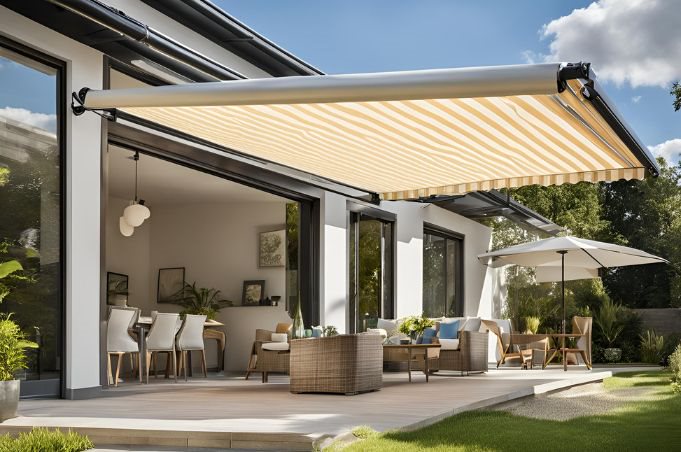
Having an enjoyable outdoor space will let you perform your favourite activities comfortably. Whether grilling up a storm, practising your morning yoga, or relaxing on a couch, having adequate protection from the elements is crucial. Without overhead coverage, even the sunniest day can quickly turn sour due to unexpected showers, falling debris, or intense sunlight. Furthermore, excessive heat and glare can drive you indoors, disrupting your outdoor plans. Hence, adding a feature that provides shade and shelter is imperative. The alternatives are divided into two categories viz. patio covers and outdoor window awnings. This blog will explore the differences and benefits of each to help you decide which is the best fit for your outdoor needs.
Protection from the Elements
When fully extended, outdoor window awnings offer substantial protection from sunlight and can shield you from rain, provided winds remain calm. However, when strong winds are blowing, rain can easily find its way underneath, leaving you exposed.
With patio covers, you can install retractable side screens, which create a complete enclosure. This feature protects from wind-driven rain, insects, glare, and airborne allergens like pollen. The added protection makes patio covers a versatile solution for various weather conditions, allowing you to enjoy your outdoor space regardless of the elements.
Durability and Longevity
Patio covers generally have a clear advantage over outdoor window awnings for their durability. Fabric awnings can suffer from moisture damage, mould growth, and tearing, leading to costly repairs or replacements. Even more robust materials like acrylic can become stained or fade over time due to prolonged sun exposure. Additionally, outdoor window awnings must be retracted during turbulent weather to avoid damage, as they aren’t meant to shield strong winds. There is more on this in Common Window Replacement Mistakes and How to Avoid Them.
Patio covers feature sturdy, anchored frames and roofs, making them far more resilient against storms and heavy snow loads. If you live in an area with harsh winter conditions, a patio cover is a wise investment for long-term stability and peace of mind.
Variety and Aesthetic Appeal
Outdoor window awnings provide a delightful variety of fabrics, colours, and patterns, with some brands offering hundreds of choices to match your style. This adaptability balances the exterior design of your home, enhancing its visual charm. Outdoor window awnings can be retractable or fixed but they must attach to the home. For independent shade options, consider outdoor motorised blinds or shade sails, which offer unique benefits.
Patio covers typically come in a limited selection of frame colours, predominantly white and beige. Patio frames can be painted to match the exteriors of your home. Furthermore, patio covers are available in diverse configurations, including attached and freestanding models.
Maintenance Requirements
Retractable and fixed outdoor window awnings demand regular care to retain their functionality and visual appeal. It is advisable to clean them at least once a year, though a bi-annual cleaning is optimal. It involves scrubbing the fabric to eliminate dirt and inspecting for any signs of damage, such as rips or frays.
Patio covers, especially those with aluminium frames, require minimal maintenance—often just a quick rinse with a garden hose. For added convenience, opt for covers with an electrostatic finish that resists chipping, scratches, and fading over time.
Regular maintenance is essential for both options to ensure they continue to enhance your outdoor living experience.
Environmental Impact
- Patio covers, particularly those made from sustainable materials, can be an eco-friendly alternative, providing lasting shade and reducing the need for air conditioning in nearby rooms.
- Outdoor window awnings can also contribute to energy efficiency by blocking the sun’s heat and glare, ultimately lowering energy bills.
Be sure to explore options that use environmentally friendly materials and manufacturing processes, regardless of the option you choose.
Cost Considerations
Outdoor window awnings are considered a more economical choice compared to patio covers. Their installation is simple, leading to lower labour costs. The materials used for outdoor window awnings, primarily fabrics, are less expensive than those used in permanent structures, such as aluminium, wood, or fibreglass. However, while the initial investment for outdoor window awnings is lower, it is vital to consider their lifespan; even the highest quality awnings may require replacement every five to ten years.
A patio cover, though pricier upfront, offers a more durable long-term solution and increases the value of your home.
Additional Considerations
You should make a decision depending on how you will use your outdoor space. If you often host gatherings or want a versatile area for various activities, patio covers may be the better option due to their sturdiness and ability to withstand diverse weather conditions.
Nonetheless, if you want something you can adjust based on the weather, outdoor window awnings might fit your needs. Each option offers unique advantages, so consider your lifestyle and how you envision using your outdoor space.
Wrapping It Up
Choosing between outdoor window awnings and patio covers will depend on your needs, lifestyle and budget.
- If you seek a cost-effective, flexible shade solution with diverse aesthetic options, outdoor window awnings are an excellent choice.
- A patio cover may be the better investment for those prioritising long-term durability, substantial protection from the elements, and lower maintenance requirements.
Whichever option you choose, ensuring your outdoor space can handle the elements will significantly enhance your enjoyment and the use of your outdoor living area. With careful consideration of the factors discussed, you can make an informed decision that best suits your outdoor lifestyle.