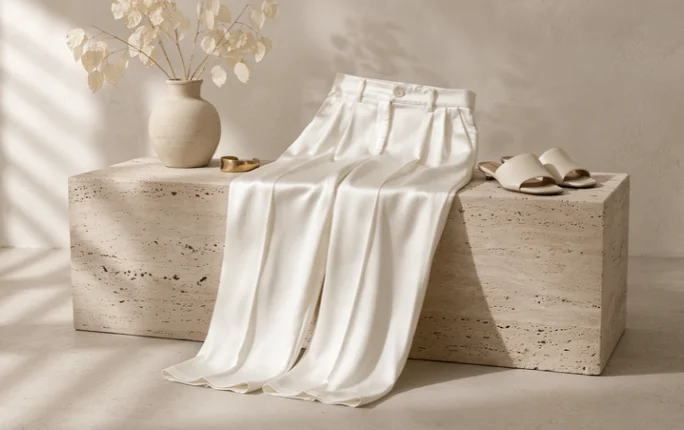
White silk pants combine a fluid drape with a clean, polished look that works beyond formal events. They can suit dinners, vacations, offices, weddings, or relaxed weekends with the right styling. The key is choosing a suitable fabric, fit, lining, and outfit combination. Those details determine whether the finished look feels sophisticated or awkward.
Direct answer: White silk trousers work best when the fabric has enough weight, the fit allows movement, and undergarments stay invisible. Pair them with fitted knits, crisp shirts, simple tanks, or structured jackets. Neutral shoes create a refined outfit, while contrasting colors make the pants feel more modern and expressive.
Quick Guide to Choosing and Wearing Them
| Consideration | What to Look For | Why It Matters |
|---|---|---|
| Fabric | Pure silk, silk satin, or quality satin | Changes drape, shine, price, and care |
| Fit | Straight, wide-leg, relaxed, or tapered | Controls the overall silhouette |
| Lining | Full or partial lining | Helps reduce transparency |
| Waist | Tailored, elastic, or drawstring | Affects comfort and formality |
| Length | Ankle, full length, or floor-skimming | Changes shoe choices and proportions |
| Occasion | Casual, work, travel, or evening | Guides the top and accessories |
| Care | Hand wash or dry-clean instructions | Protects texture and shape |
Silk trousers have gained renewed visibility because they balance comfort with polish. Recent U.S. fashion coverage has featured fluid, silky pants for work, travel, evenings, and everyday dressing. The style also transitions well between warmer months and layered fall outfits. The trend does not require an entirely formal wardrobe. A simple sweater or T-shirt can make the fabric feel relaxed. A blazer or fitted blouse can create a sharper look. That flexibility makes pale, fluid trousers useful across several occasions.
How to Choose White Silk Pants That Look Polished
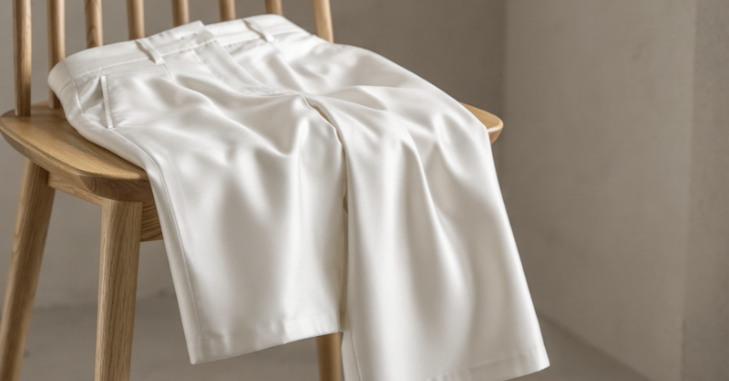
Start White Silk Pants with the fabric because the label alone does not tell the complete story. Pure silk usually feels light, smooth, and naturally lustrous. Silk satin has a glossy surface created by its weave. Synthetic satin can provide a similar visual effect at a lower price. Each option brings different advantages. Pure silk feels luxurious and breathable but often requires gentler care. Synthetic satin is usually easier on the budget and can resist wrinkles better. A blended fabric may offer a practical balance between appearance, durability, and maintenance.
Compare the Main Fabric Options
| Fabric Type | Main Advantages | Possible Drawbacks | Best For |
|---|---|---|---|
| 100% silk | Soft feel, fluid drape, natural sheen | Higher price, delicate care | Special occasions and luxury wardrobes |
| Silk satin | Smooth surface, elegant movement | Can snag or show marks | Evening and polished outfits |
| Polyester satin | Lower cost, easier maintenance | Less breathable than silk | Trend-focused everyday outfits |
| Silk blend | Balanced feel and durability | Quality varies by blend | Frequent wear and practical styling |
Verdict: Choose pure silk when fabric quality and natural feel matter most. Choose quality satin when price and simpler care are bigger priorities. A well-cut pair can look polished regardless of fiber content.
Pay Attention to Fit Before Color
White draws attention to shape, seams, and construction. A weak fit can therefore become more noticeable than with darker trousers. The waistband should sit smoothly without pulling. The fabric should also fall cleanly through the hips and thighs. Wide-leg cuts create movement and suit fitted or cropped tops. Straight-leg shapes feel simpler and often work better in professional outfits. Tapered cuts create a sharper finish around the ankle. Relaxed drawstring versions work especially well for travel and resort dressing. Check the garment from several angles before deciding. Bright changing-room lights can reveal pulling or transparency that softer lighting hides. Sitting down is another useful test. It shows whether the fabric becomes strained around the hips or thighs.
How to Handle Transparency
Light-colored silk can become slightly transparent under strong lighting. Fabric weight, weave, lining, and fit all influence the effect. A tightly stretched garment often appears more sheer. A relaxed cut usually gives the material more coverage. Underwear without visible seams, in a shade close to your skin, usually works better than bright white underwear. White can create visible contrast beneath light fabric. Nude tones reduce that contrast instead. Laser-cut edges can also help prevent obvious lines. A lined pair offers another layer of coverage. Check that the lining moves naturally rather than bunching around your legs. Partial lining can work when full lining feels too warm. The goal is coverage without losing the fabric’s movement.
Seven Easy Ways to Style Them
Silky trousers can shift from casual to formal without requiring complicated outfits. The easiest approach is balancing their sheen with a contrasting texture. Cotton, knitwear, linen, denim, and leather can all create useful contrast. Keep accessories controlled when the fabric already catches light.
1. Pair them with a fitted black top. The contrast feels clean and works for dinner or evening events. 2. Add a chunky neutral sweater. The heavier texture balances the fluid fabric during cooler months. 3. Wear a simple white tank. Tonal dressing creates a long, uncluttered silhouette for summer. 4. Add an oversized blazer. This combination can work for creative offices, dinners, or city outings. 5. Try a crisp button-down shirt. Tuck it loosely for a polished outfit without excessive formality. 6. Combine them with a denim jacket. Denim reduces the dressy feeling and makes the trousers easier for weekends. 7. Use a silk or satin blouse carefully. Similar fabrics can work together when the colors or textures provide contrast.
You can find more general clothing inspiration in Webivest’s Fashion section. The site’s guide to how styling choices influence an outfit also explores how different visual elements change a finished look. These ideas are useful when balancing statement trousers with simpler pieces.
Which Shoes Work Best?
Shoes change the mood of the outfit quickly. Minimal heels create a refined evening look without competing with the fabric. Pointed flats keep the silhouette polished while offering more comfort. Clean sneakers can make wider trousers feel intentionally casual. Loafers can also work with straight-leg or ankle-length cuts. Their structured shape gives the soft fabric more definition. Avoid shoes that visually overwhelm a delicate hem. Heavy footwear usually works better when another structured element appears above the waist. For warm weather, simple leather sandals create an easy resort look. Metallic sandals can suit evening outfits but need restrained jewelry. Too much shine can make the outfit feel busy. One reflective element is often enough.
What Tops Look Best?
The most reliable tops create balance around the waist and shoulders. A fitted knit works particularly well with wider trousers. A tucked shirt can provide the same visual definition. Cropped jackets also help establish clear proportions. Oversized tops can still work with fluid bottoms. Choose one with deliberate structure around the shoulders or cuffs. A completely loose outfit can hide your shape. Partial tucking often solves that problem without making the outfit feel rigid. Color offers another way to create contrast. Black, navy, camel, chocolate, gray, and burgundy all pair naturally with white. Pastels create a softer result for spring or daytime events. Bright colors work best when the remaining accessories stay simple.
Accessories That Complete the Look
Accessories should support the trousers instead of competing with their sheen. A structured handbag adds useful contrast against fluid fabric. Simple gold or silver jewelry can create a refined finish. A narrow belt can also define the waist on tailored styles. For more accessory ideas, Webivest has a guide to using contemporary jewelry with different outfits. That guide targets a different market than this one. Still, the styling principles around occasion, proportion, and visual balance remain useful. Large statement jewelry can work for evening events. Keep other accessories quieter when using one bold piece. This approach prevents the outfit from becoming overloaded. It also keeps the trousers as a clear part of the overall composition.
Can You Wear Them During Fall and Winter?
White trousers are not limited to summer wardrobes. Recent fashion coverage has challenged the old idea that white should disappear after Labor Day. Silk and satin styles can work especially well with textured seasonal layers. Darker outerwear creates useful contrast against the lighter fabric. Try them with charcoal, camel, chocolate, or black knitwear. A tailored wool coat can make the outfit feel more seasonal. Closed-toe flats or boots work when the hem allows enough clearance. The goal is intentional contrast rather than forcing a summer outfit into cold weather. Fabric weight matters more during cooler months. Thin unlined silk may feel impractical outdoors. A lined or heavier satin version offers more coverage. Layering also becomes easier when the trouser cut is not excessively tight.
How to Care for Silk Trousers
Always start with the garment’s care label. Different silk constructions can require different treatment. Some pieces permit gentle hand washing. Others specify professional dry cleaning. Avoid aggressive stain rubbing because it can damage delicate fibers or alter the finish. Blot spills with a clean cloth instead. Handle water marks according to the manufacturer’s instructions. Testing any cleaning method on a hidden area is safer. Store trousers where they can hang without severe creasing. Use a padded or smooth hanger when possible. Keep them away from prolonged direct sunlight. Strong light can affect delicate fabrics and pale colors over time.
What to Check Before Buying
Look beyond the front view when evaluating a pair. Check seam quality, lining, pocket placement, zipper construction, and hem finishing. Inspect the fabric under natural light where possible. These details can reveal quality differences quickly. Read the fiber label carefully as well. “Silky,” “silk-like,” and “satin” do not necessarily mean the garment contains silk. Satin describes a type of weave rather than one specific fiber. Knowing that distinction makes product comparisons easier. For online purchases, review measurements instead of relying only on the letter size. Compare the waist, hip, rise, inseam, and total length with clothing you already own. Check return rules before ordering. Light-colored trousers deserve a careful fit test at home.
Final Styling Takeaway
A strong pair of pale silk trousers should feel comfortable before it looks fashionable. Focus first on fabric quality, opacity, fit, and movement. Then choose tops and shoes that balance the fabric’s softness. That sequence makes styling much easier. For the most versatile wardrobe choice, a straight or relaxed wide-leg cut is hard to beat. Neutral tops can handle everyday wear, while sharper pieces prepare the same trousers for evenings. Treat the fabric carefully and check transparency before leaving home. You will get far more use from the purchase
Frequently Asked Questions
Are white silk pants see-through?
They can be, depending on fabric weight, weave, lining, and fit. A looser cut usually shows less than tightly stretched fabric. Skin-toned seamless underwear can also reduce visible contrast. A lined pair offers the most dependable coverage.
Can you wear silk trousers casually?
Yes, especially with simple cotton tops, sweaters, denim jackets, or sneakers. Casual textures reduce the formal feeling created by the fabric’s sheen. Keep the silhouette relaxed but intentional. A simple bag can finish the outfit without adding excess polish.
Are satin pants the same as silk trousers?
Not necessarily because satin describes a weave rather than a fiber. Satin can be made from silk, polyester, or other materials. Pure silk may also use different weaves. Always check the fiber-content label before comparing prices.
What color underwear works under white trousers?
A shade close to your natural skin tone usually creates the least visible contrast. Bright white underwear can sometimes show beneath pale fabric. Seamless edges also help prevent noticeable lines. Test the combination under natural and indoor lighting.
Can you wear white trousers after Labor Day?
Yes, modern styling no longer treats that tradition as a strict rule. White can work throughout fall and winter with seasonal textures. Try darker knitwear, structured coats, and closed shoes. The surrounding pieces make the outfit feel appropriate for cooler weather.