
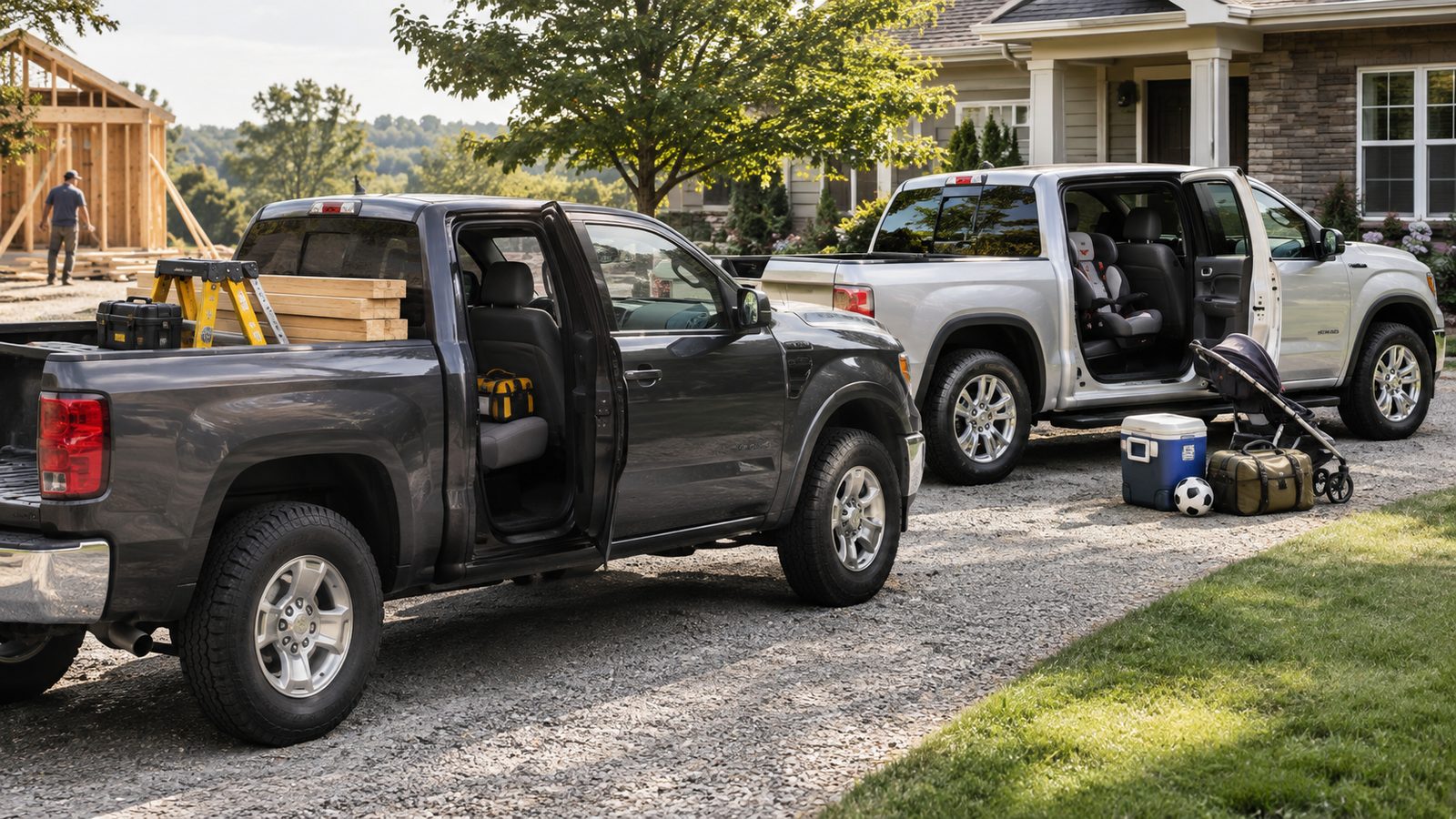
Choosing a crew cab or extended cab changes much more than your truck’s back-seat space. The cab affects passenger comfort, bed choices, parking, price, and everyday usefulness. For most families, a crew cab is easier to live with. Quick answer: Choose a crew cab when adults, children, or car seats regularly use the second row. Choose an extended cab when passengers ride occasionally and bed space matters more. The better choice depends on who rides with you, what you haul, and how much truck you want to park daily.
Crew Cab vs. Extended Cab at a Glance
| Factor | Crew Cab | Extended Cab |
|---|---|---|
| Rear-seat room | Most spacious | Smaller and tighter |
| Rear doors | Usually four full-size doors | Often smaller rear doors |
| Adult passengers | Better for regular use | Better for occasional use |
| Car-seat access | Usually easier | Can feel cramped |
| Interior storage | More usable cabin space | Useful secure storage behind front seats |
| Bed choices | May limit the longest bed | Often offers longer-bed combinations |
| Purchase price | Usually higher | Often lower |
| Parking | Can require more space | Often easier with comparable bed choices |
| Luxury trims | Widely available | Fewer premium choices on many models |
| Best fit | Families and daily drivers | Work-focused and budget-conscious buyers |
Key Takeaways
- Crew cabs usually provide the best rear-seat comfort.
- Extended cabs trade passenger room for a more work-focused layout.
- Cab names vary across Ford, Chevrolet, GMC, Ram, Nissan, and other brands.
- Bed length and wheelbase depend on the exact truck configuration.
- Towing and payload ratings must be checked for the specific vehicle.
- Families should test car-seat fit before buying.
- Work-truck buyers should measure the cargo they carry most often.
What Is the Difference Between a Crew Cab and an Extended Cab?
A crew cab normally has two full seating rows and four conventional doors. Rear passengers receive substantially more legroom than they do in most smaller cabs. The design makes frequent passenger use much more practical. An extended cab sits between a regular cab and a full crew configuration. It adds space behind the front row without maximizing rear-seat comfort. Some models use smaller doors, while other designs use rear-hinged doors. Manufacturers also use different marketing names for similar layouts. Ford uses SuperCab on certain extended-style configurations, while Chevrolet and GMC use Double Cab. Ram uses Quad Cab on trucks positioned below its larger Crew Cab. That naming can make truck shopping confusing. Compare actual dimensions instead of trusting the badge alone. Rear legroom, door size, bed length, and wheelbase tell you more.
Crew Cab or Extended Cab: Which Gives You More Passenger Space?
The crew cab is the clear winner for passenger room. It is designed around frequent use of both seating rows. Adults can usually enter, exit, and sit more comfortably. Extended models still provide a second-row area on many trucks. That space may work well for children, shorter trips, pets, bags, or work gear. Tall adults can find the rear area uncomfortable during longer drives. This difference matters if your pickup replaces an SUV or family sedan. A spacious back seat makes school runs and road trips easier. It also gives passengers more freedom without moving the front seats forward.
Which Cab Works Better With Car Seats?
A crew cab is usually the easier option for families using child restraints. Larger rear doors provide better access while installing or removing a seat. Extra rear legroom also helps with bulky rear-facing seats. An extended design can still work with compatible child restraints. Available space differs considerably between truck models and model years. A rear-facing seat may affect how far the front passenger seat can move. Bring your child seat when evaluating a truck whenever possible. Install it using the manufacturer’s approved method before making your decision. Confirm that front passengers still have enough safe seating space.
How Bed Length Changes the Decision
A bigger cab uses space that could otherwise support a longer cargo bed. Manufacturers solve this tradeoff differently across their truck ranges. Some crew models still offer useful longer-bed combinations. Extended configurations often appeal to tradespeople because bed length remains a priority. Longer beds help with lumber, equipment, tools, landscaping materials, and recreational gear. They can also reduce reliance on bed extenders or trailers. You should measure the cargo you carry before comparing trucks. Consider closed-tailgate length rather than assuming every item can hang outside. A few extra inches can matter more than another comfortable rear seat.
Price and Ownership Costs
Crew models often cost more than comparable smaller-cab versions. You are paying for a larger passenger compartment and broader feature availability. Premium trims are also commonly centered around four-door crew configurations. Extended models can lower the entry cost on certain truck lines. The savings may help you afford four-wheel drive, towing equipment, or another useful option. Actual differences depend on the manufacturer, trim, and available incentives. Purchase price should not be your only financial comparison. Financing structure can change the long-term cost of a truck significantly. Webivest’s guide to leasing versus buying a vehicle explains those ownership tradeoffs. Insurance also deserves attention before choosing an expensive trim. Rates depend on the vehicle, driver, coverage, location, and several other factors. Webivest also explains how to compare auto insurance companies before committing to coverage.
Does Cab Size Affect Towing and Payload?
Cab choice can influence a truck’s towing and payload numbers. A larger passenger compartment adds vehicle weight and can change available configurations. Yet cab style alone never determines a truck’s capability. Engine, drivetrain, axle ratio, wheelbase, trim, and equipment can change published ratings. Two visually similar trucks may therefore have different limits. Never assume the smaller cab automatically tows more. Check the manufacturer’s tow guide for the exact configuration you are considering. Inspect the vehicle’s payload label before loading passengers and cargo. This matters especially when towing travel trailers or carrying heavy equipment.
Which Is Easier to Park and Drive Every Day?
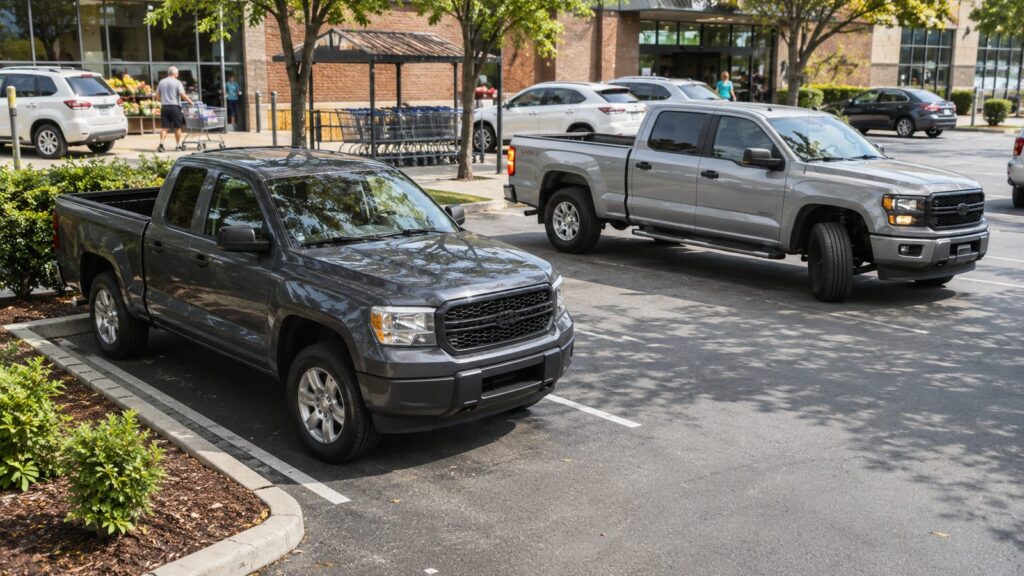
Cab size becomes noticeable in garages, parking lots, and narrow streets. The complete truck length matters more than the passenger compartment alone. A crew cab with a short bed may remain manageable. An extended model with a long bed can still become a large vehicle. Its turning needs may exceed those of a shorter crew configuration. Compare full length and wheelbase before judging maneuverability. Measure your garage if space is close. Include room for the bumper, hitch, shelving, and garage door. A truck that technically fits can still be frustrating every morning.
Crew Cab Pros and Cons
Pros
- More comfortable rear seating for adults and children
- Easier access through larger rear doors
- Better suited to car seats and family trips
- More useful secure storage inside the cabin
- Wider availability of premium trims and features
- Strong choice for a truck used as the primary household vehicle
Cons
- Often costs more than a smaller cab
- Can restrict the longest available bed combinations
- May increase overall truck length with larger beds
- More interior space may be unnecessary for solo drivers
Extended Cab Pros and Cons
Pros
- Often costs less than an equivalent crew configuration
- Provides extra seating beyond a regular cab
- Rear space works well for tools, bags, or occasional passengers
- Longer-bed combinations may be easier to find
- Can suit work-focused buyers who prioritize cargo
Cons
- Rear passenger space is usually tighter
- Rear doors may be smaller or less convenient
- Long trips can become uncomfortable for adults
- Child-seat installation may require more compromise
- Premium trims may have fewer cab choices
Which Cab Is Better for a Work Truck?
An extended layout often makes sense when your truck earns its keep. It provides covered interior storage while keeping the passenger area relatively compact. Longer-bed availability can also benefit contractors and tradespeople. Crew configurations still make sense for crews traveling together. Four adults can reach jobsites more comfortably without using another vehicle. The rear floor can also hold expensive equipment away from weather. Think about what occupies the truck most days. Frequent passengers call for a larger cabin, while bulky materials call for more bed space. Occasional needs should not outweigh the truck’s primary job.
Which Cab Is Better for a Family Truck?
A crew cab is the stronger choice for most families. It provides easier rear access and more comfortable seating for growing children. Adults can also use the back without treating it as temporary seating. The larger interior works well during vacations and weekend trips. Backpacks, groceries, electronics, and weather-sensitive gear can stay inside. Pets also have more usable space during longer journeys. A family truck still needs a practical bed. Check whether your preferred model offers enough cargo length with the larger cab. A tonneau cover can also make shorter beds more useful.
A Simple Five-Question Decision Test
Ask these questions before choosing your cab:
- Will adults ride in the back every week? Choose the larger passenger compartment if the answer is yes.
- Will you regularly install a child seat? Favor easier rear-door access and more legroom.
- Do you carry long materials often? Compare bed lengths before comparing interior features.
- Does the truck need to fit a garage? Measure the complete vehicle, including accessories.
- Is the lower purchase price important? Compare similarly equipped versions before deciding.
These questions keep the decision connected to real use. Dealership inventory can make one configuration look more attractive than another. Your weekly routine should carry more weight than the trucks currently parked outside.
Our Verdict: Which Cab Should You Buy?
Choose a crew cab if people regularly use the second row. The extra passenger space benefits families, commuters, road-trippers, and owners carrying adults. It is the safer default for a multipurpose household truck. Choose an extended cab when the rear seat is secondary. It can provide secure storage, occasional seating, and access to useful bed configurations. That balance often suits contractors and budget-focused truck buyers. Do not choose by cab name alone. Compare the exact truck’s dimensions, payload, equipment, price, and bed. The right configuration is the one matching your normal week. If you later sell your truck privately, protect the value you paid for. Webivest explains several warning signs in its guide to problem car buyers to avoid. Good records and careful maintenance can also make a future sale easier.
Frequently Asked Questions
Should I get a crew cab or extended cab?
Choosing a crew cab or extended cab depends mainly on passenger frequency. Pick the larger cab when people regularly use the second row. Choose the smaller option when rear seating is occasional and cargo space matters more.
Is a crew cab bigger than an extended cab?
A crew cab normally provides a larger passenger compartment. Rear seats have more usable legroom and easier door access. Total vehicle length still depends on the bed and wheelbase.
Can adults sit comfortably in an extended cab?
Adults can use many extended cabs for shorter journeys. Comfort depends on the truck’s rear legroom, seat design, and passenger height. Frequent adult passengers will usually prefer a crew configuration.
Is an extended cab better for work?
It can be better for work when bed space matters more than passenger comfort. The rear area can also protect tools or smaller equipment. Always compare payload and bed dimensions for the exact configuration.
Does a crew cab have a shorter bed?
It often does when compared within the same truck line. Some manufacturers offer more than one bed with their crew models. Check current configurations rather than treating the rule as universal.
Is a crew cab worth the extra money?
It is often worth paying more when the rear seats get regular use. Families also benefit from easier child-seat access and greater passenger comfort. Solo drivers may get more value from another configuration.
Next Step
Compare two trucks with similar engines, drivetrains, and equipment before deciding. Sit in both rear seats and test any child seat you use. Then compare bed length, payload, total length, and final purchase price. —