
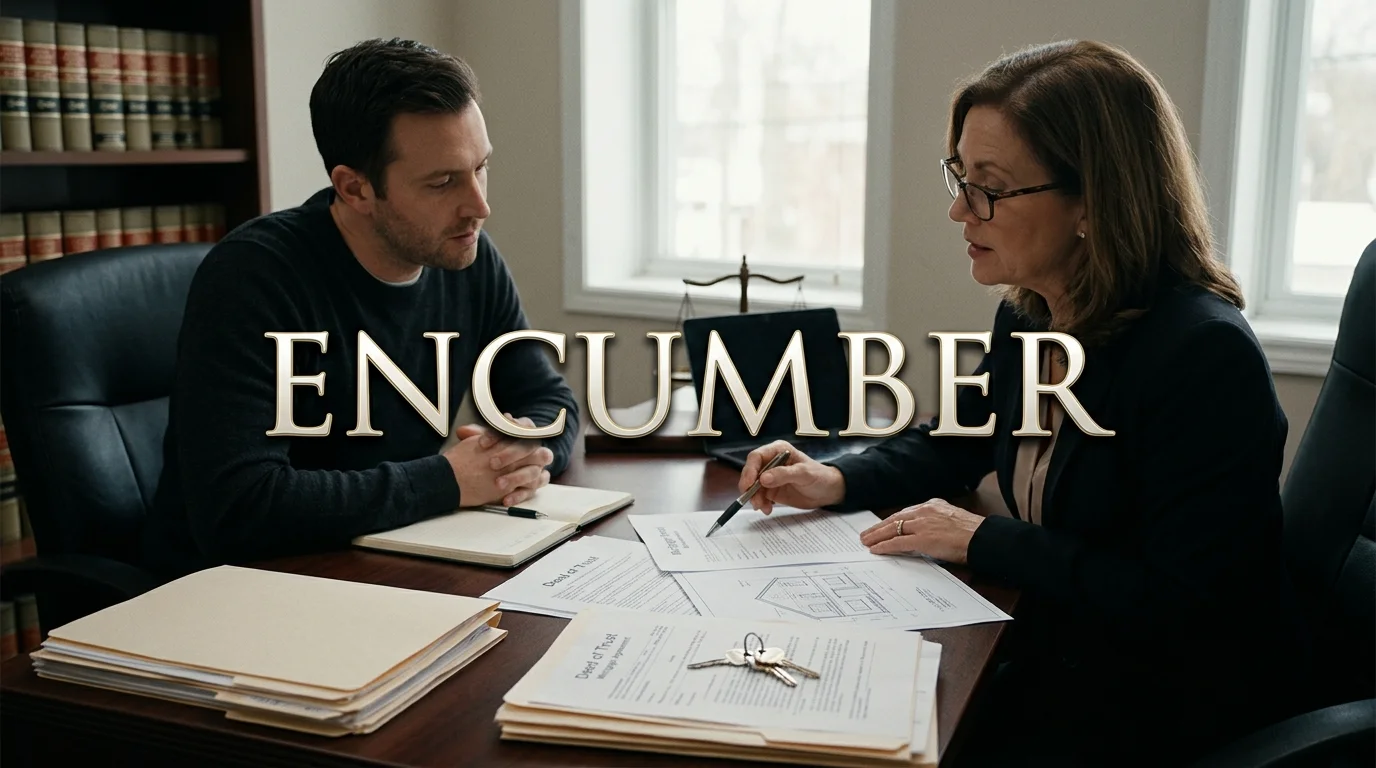
Encumber means to burden, restrict, hinder, or place a claim on something. In U.S. property law, it often describes placing a legal interest against real estate. That interest can affect how freely an owner uses, finances, or transfers the property.
You may encounter the term in mortgages, title documents, contracts, or financial discussions. It also appears outside law when something makes an activity harder or less flexible. Context usually makes the intended meaning clear.
Direct answer: To encumber something means to burden or restrict it with an obligation, claim, debt, or other limitation. In real estate, property is encumbered when a mortgage, lien, easement, lease, or similar interest affects it. The owner can retain ownership while facing limits on use or transfer.
Quick Reference Table
| Key point | Meaning |
|---|---|
| Basic meaning | To burden, hinder, restrict, or weigh down |
| Legal meaning | To place a claim, right, or restriction on property |
| Common property examples | Mortgages, liens, easements, leases, covenants |
| Does ownership change? | Usually not simply because a burden exists |
| Can a sale be affected? | Yes, depending on the claim or restriction |
| Common related word | Encumbrance |
| Common adjective | Burdened (or encumbered) |
Key Takeaways
- The word can describe both legal restrictions and ordinary burdens.
- Real estate is commonly burdened by mortgages, liens, easements, or leases.
- A property owner may still hold title while another party has enforceable rights.
- Some claims must be resolved before closing, while others may remain afterward.
- Buyers should understand each recorded interest instead of treating every restriction equally.
What Does Encumber Mean?
In ordinary English, the verb means to make movement, progress, or action more difficult. A business burdened by excessive debt can be described as weighed down by its financial obligations. Heavy equipment can similarly slow or complicate a worker’s movement.
The legal meaning is more specific, especially in American real estate. Legal references describe the term as placing a burden or claim on real property. Examples include liens, mortgages, easements, leases, and restrictive covenants.
That legal meaning focuses on rights attached to an asset rather than simple inconvenience. Another person or organization may gain a legally recognized interest. The owner’s freedom over the asset can then become limited.
What Does It Mean to Encumber Property?
To encumber property means to subject it to a claim, obligation, or restriction affecting the owner’s rights. The owner does not necessarily lose the property when this happens. Instead, another party gains an interest that can affect certain decisions.
A home mortgage provides a familiar example for American homeowners. The borrower owns the home, while the lender holds a security interest. That interest remains relevant until the secured obligation is properly satisfied and released.
A restriction does not always involve money or unpaid debt. An easement may give a utility company access across part of someone’s land. A restrictive covenant might control certain uses or building activities.
Readers needing deeper property-specific information can also consult Webivest’s Encumbrance Explained article. That guide covers mortgages, liens, easements, leases, restrictive covenants, and title concerns. It complements this definition-focused explanation without duplicating the same search intent.
Common Ways Property Becomes Burdened
Different legal interests can affect property in different ways. Some secure money that the owner owes to another party. Others control access, occupancy, development, or permitted uses.
Mortgages
A mortgage or deed of trust commonly secures financing for real estate purchases. The lender receives a security interest tied to the loan. Selling or refinancing usually requires addressing that existing interest appropriately.
Mortgages are therefore common property burdens, not unusual title defects. Their existence does not automatically signal a serious problem. The important issue is how the mortgage will be handled during the transaction.
Liens
A lien generally represents a financial claim against property. Examples include mortgage liens, certain tax liens, judgments, and construction-related claims. Their treatment depends on the claim, applicable law, and transaction.
A lien may need payment, settlement, or release before clear title can be delivered. Recorded claims can therefore affect closing preparations. Buyers should review them with the appropriate title or legal professional.
Easements
An easement gives another party a limited right to use specified land. Utility access and rights-of-way are common examples. The owner can still possess the property despite that outside right.
Some easements continue after a property changes owners. Their practical effect depends on location, scope, and permitted use. Buyers should understand those details before planning construction or improvements.
Leases
A lease gives a tenant contractual possession or use rights for an agreed period. Selling leased property does not always erase those rights. The transaction may remain subject to the existing agreement and local law.
Rental arrangements therefore deserve careful review during a purchase. Webivest’s guide to letting residential properties provides additional background on lease terms. Understanding occupancy rights can prevent surprises after ownership changes.
Restrictive Covenants
Restrictive covenants can impose rules concerning how land is developed or used. They may address construction, setbacks, architectural requirements, or prohibited uses. Their effect depends heavily on the recorded language.
Owners should not assume every covenant creates the same limitations. State law and specific documents can affect enforcement. A qualified local professional can explain unusual or disputed restrictions.
Burdened vs. Free-and-Clear Property
A burdened asset carries a claim, restriction, security interest, or other qualifying burden. A debt-free asset generally lacks those outside claims affecting the owner’s control. The difference becomes important during sales, borrowing, and title reviews.
| Feature | With a burden | Free and clear |
|---|---|---|
| Third-party interest | Present | Generally absent |
| Mortgage possible | Yes | No outstanding mortgage |
| Transfer complexity | May require extra steps | Usually simpler |
| Use restrictions | May exist | Fewer title-based restrictions |
| Collateral flexibility | Can be limited | Often greater |
Being free and clear does not necessarily mean a property has no rules whatsoever. Zoning regulations and general laws may still control its use. The term normally concerns claims or interests attached to the specific asset.
Does a Property Burden Prevent a Sale?
A property burden does not automatically prevent a sale. Some financial claims can be resolved using money from the closing. Other interests can remain attached after ownership changes.
For example, the seller may pay off an outstanding mortgage from the sale proceeds. A utility easement might continue after the buyer receives title. These two situations require different responses, even though both affect the property.
This distinction explains why title review matters before closing. Buyers need to know what each listed item means. Webivest’s commercial property buying guide also discusses reviewing legal compliance and title concerns before purchasing real estate.
Finance and Business Uses
The word also appears when discussing assets pledged as security for borrowing. A business may offer equipment, real estate, or another qualifying asset as collateral. The asset then carries a creditor’s security interest.
This restriction can affect future financing decisions. An existing lender may already hold rights that reduce the asset’s usefulness for another loan. Businesses therefore track which assets are pledged and which remain available.
Debt can also burden an organization in a broader, nontechnical sense. Writers may describe a company as held back by heavy debt obligations. In that usage, the word emphasizes reduced financial flexibility.
Webivest’s personal-loan coverage provides related reading about credit and borrowing considerations. Loans themselves are not identical to property restrictions. Yet secured debts can create interests in assets used as collateral.
Everyday Meaning and Examples
You will encounter the term beyond legal documents. In general English, it can describe anything that impedes action or creates an unwanted burden. The word sounds more formal than simpler alternatives.
Consider these examples:
- Heavy bags slowed the traveler during the long walk.
- Excessive paperwork slowed the approval process.
- Large debts left the company financially strained.
- A mortgage can leave real estate burdened until the secured obligation ends.
- An easement can restrict how part of a property is used.
- Too many outdated procedures can burden a small organization.
Words such as burden, hinder, restrict, and hamper may work in ordinary contexts. Legal writing requires more care because each term can have a different effect. Context determines which alternative is appropriate.
Related Word Forms

These related words describe different grammatical parts of the same general idea. The verb describes imposing the burden. The adjective describes something already affected by that burden.
Encumbrance is the noun naming the burden, claim, right, or restriction itself. A mortgage can therefore encumber real property. The property may then be described as burdened.
This distinction helps when reading title reports or legal explanations. One word describes the action; another describes the condition. The noun identifies the interest or restriction involved.
How Buyers Can Check for Property Restrictions
Real estate buyers should not rely on a seller’s informal description alone. A title search can identify recorded interests affecting ownership or use. Review the resulting documents before the transaction becomes final.
Useful review steps include:
- Examine the title report or title commitment.
- Identify mortgages, liens, easements, covenants, and other exceptions.
- Confirm which financial claims should be released at closing.
- Review leases when purchasing occupied property.
- Check surveys when boundaries or physical improvements raise concerns.
- Determine which restrictions remain after ownership transfers.
Notarization may also matter for deeds and other transaction documents. Webivest’s guide explaining why notary services matter provides related information. Notarization serves a different purpose from identifying title restrictions.
Can a Property Burden Be Removed?
You can remove some property claims after you satisfy the underlying obligation. A paid mortgage or lien often requires a documented release. The exact process depends on state law and the type of interest involved.
Nonfinancial restrictions can require different solutions. An easement might expire, be released, or change through an agreement. A restrictive covenant may have separate amendment or termination requirements.
Never assume a public record disappears automatically after a dispute or debt ends. Confirm that any necessary release has been properly recorded. A title company or local real estate attorney can help with unusual situations.
Why the Meaning Matters for U.S. Property Owners
The distinction matters because ownership does not always provide unlimited control. A person can hold title while another party possesses specific enforceable rights. Those rights can influence financing, construction, occupancy, or transfer.
Buyers should therefore ask more than whether a property has a mortgage. They should understand every significant claim or restriction shown during title review. Different interests can create different financial and practical consequences.
This is also why the related noun should not be confused with a lien. A lien usually concerns a financial claim. The broader category can include nonfinancial rights such as easements.
Frequently Asked Questions
What does encumber mean in simple terms?
To encumber something means to burden, restrict, or make it less free from obligations. The burden can be physical, financial, contractual, or legal. In property law, it commonly refers to placing a claim or restriction on real estate.
Does a burdened title mean someone does not own the property?
No, an owner can still hold title to property carrying a mortgage or other restriction. The outside interest limits particular rights rather than automatically transferring ownership. The specific documents determine what each party can do.
Is a mortgage an encumbrance?
Yes, a mortgage generally creates a security interest connected to real property. It gives the lender rights securing repayment of the loan. The related lien usually remains relevant until properly satisfied and released.
Is every burden a lien?
No, a lien is one type of property burden, usually involving a financial claim. Easements and restrictive covenants can affect property without representing unpaid money. That distinction matters during title review.
Can you sell a home with a lien or mortgage?
Often, but it depends on the specific interest involved. Some claims can be paid or released during closing. Other restrictions may continue after the new owner takes title.
What is the opposite term?
The usual property-related term is unencumbered or sometimes free and clear. It generally describes an asset without outstanding claims such as mortgages or liens. The exact meaning can still depend on the legal context.
The Bottom Line
Understanding this term helps make legal and financial documents easier to read. The core idea is always some form of burden, restriction, or limitation. Property law gives that basic idea a more precise legal meaning.
For U.S. real estate, the practical question is what right another party holds. Buyers and owners should identify the interest, its duration, and its effect. They should also determine whether to resolve it before a transaction.
When a title issue involves significant money or disputed rights, professional guidance can be useful. State laws and recorded documents can change the answer. Review the actual property records before making major legal or financial decisions.