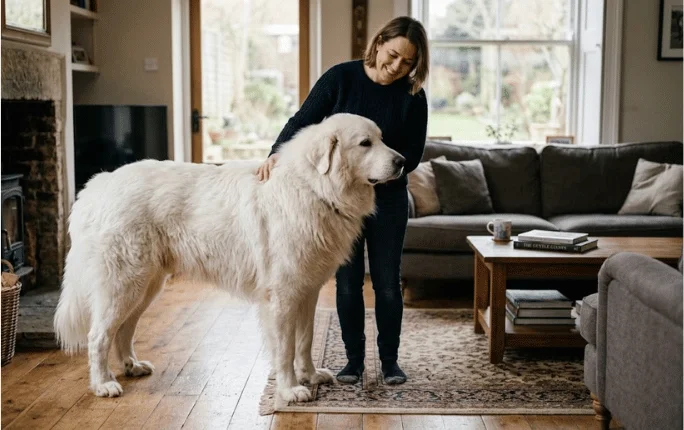
Great Pyrenees size surprises many first-time owners because these dogs combine height, muscle, and an extremely full coat. Adult males usually stand 27 to 32 inches at the shoulder. Adult females usually stand 25 to 29 inches, while typical weights start near 100 and 85 pounds, respectively.
| Key measurement | Male | Female |
|---|---|---|
| Adult shoulder height | 27–32 inches | 25–29 inches |
| Breed-standard reference weight | About 100 lb at 27 inches | About 85 lb at 25 inches |
| Common published weight range | About 100–130 lb | About 85–120 lb |
| Size category | Large to giant | Large to giant |
| Measurement point | Withers | Withers |
Quick answer: Adult males usually stand 27–32 inches and weigh about 100 pounds or more. Females usually stand 25–29 inches and weigh about 85 pounds or more. The breed standard values proportion, so height, frame, muscle, and body condition matter more than one target weight.
Key Takeaways
- Official adult height ranges are more consistent than online weight ranges.
- Males are usually taller and heavier than females.
- A thick double coat makes these dogs appear larger than the scale suggests.
- This slow-maturing breed continues developing longer than many smaller dogs.
- Use actual measurements to plan crates, beds, harnesses, gates, and vehicle space.
Great Pyrenees Size at a Glance
The official U.S. breed standard gives clear height limits for adult dogs. Males measure 27 to 32 inches, while females measure 25 to 29 inches. The standard gives example weights rather than a strict maximum range.
A 27-inch male is described at about 100 pounds. A 25-inch female is described at about 85 pounds. Weight should remain proportional to the dog’s structure, according to the parent-club standard.
Consumer breed guides often show broader adult weight ranges. Purina lists males at 100–130 pounds and females at 85–120 pounds. PetMD also notes females around 85–100 pounds and males above 100 pounds.
Why a Pyr Can Look Much Bigger Than the Scale
The breed’s double coat adds substantial visual volume around the neck, chest, and hindquarters. That coat can make a lean dog appear heavier than expected. The official standard even warns that coat can disguise bone and muscle.
Body shape also changes the impression of size. A Pyr is slightly longer than tall, creating a broad rectangular outline. Large paws, a deep chest, and a plumed tail add to that imposing profile.
Male vs Female Size: What Difference Should You Expect?
Males are usually taller and heavier, but sex does not predict every adult measurement. A large female may outweigh a smaller male. Genetics, nutrition, health, and individual structure all affect final size.
Height differences are more predictable because the breed standard defines separate male and female ranges. Weight varies more because the standard emphasizes proportion instead of a fixed ceiling. That distinction explains why online weight ranges often disagree.
| Measurement | Males | Females |
|---|---|---|
| Standard height | 27–32 inches | 25–29 inches |
| Standard weight reference | About 100 lb at 27 inches | About 85 lb at 25 inches |
| Purina range | 100–130 lb | 85–120 lb |
| Typical appearance | Taller, heavier frame | Slightly shorter, lighter frame |
Is a Pyr Large or Giant?
Breed websites do not use size labels consistently. PetMD and Purina call the Pyr a giant breed, while AKC simply describes it as large. The actual measurements matter more than the label.
In practical terms, owners should plan for a dog near or above 100 pounds. Adult height can reach 32 inches at the shoulder. That combination affects handling, vehicle access, boarding, grooming tables, and household space.
The coat can make the dog look larger than its weight suggests. That is why photos often make these dogs look heavier than listed weights. Hands-on measurement gives a better basis for planning.
When Does a Pyr Stop Growing?

This breed matures slowly compared with many smaller dogs. The AKC describes it as a slow-growing breed that takes time to reach full physical maturity. Purina recommends large-breed puppy food through the first two years.
Owners should expect the fastest visible growth during puppyhood, followed by slower filling out. No official monthly breed-standard growth chart has mandatory weights. Your veterinarian can track growth trends and body condition across repeated visits.
A puppy does not need to match an online age-and-weight chart exactly. Litter size, sex, genetics, and diet can shift growth patterns. Sudden weight loss, pain, or stalled growth deserves veterinary attention.
Why Different Websites Give Different Weights
Weight figures differ across reputable websites, which can confuse owners. The parent club gives reference weights tied to specific heights. Consumer guides often publish broader ranges from typical adult dogs.
Purina lists 100–130 pounds for males and 85–120 pounds for females. Hill’s lists smaller common ranges. PetMD uses 85–100 pounds for females and more than 100 pounds for males.
For planning, use the official height range and your dog’s actual body condition. For health, ask a veterinarian whether the weight fits your dog’s frame and development. That approach is more reliable than chasing one website’s midpoint.
How to Measure Height and Weight Correctly
Accurate measurements help you compare your dog with breed information. Height means the distance from the floor to the withers. The withers are the highest point of the shoulder blades.
- Stand your dog squarely on a firm, level surface.
- Place a flat object across the withers and measure straight to the floor.
- Use a veterinary or large-pet scale when a household scale cannot safely handle the dog’s weight.
Measure at the same time of day when tracking changes. Keep the same method and scale whenever possible. Consistency matters more than tiny differences between individual readings.
What This Size Means for Daily Life
An adult Pyr needs enough room to turn, stretch, and rest without blocking busy walkways. Doorways and rooms rarely require special construction. Furniture placement matters because a 100-pound dog can occupy substantial floor space.
Vehicle planning matters more than many new owners expect. Choose a cargo area or secured restraint system that fits the dog’s measured body. Test access height before relying on frequent car trips.
Training becomes more important as your dog gains weight. A polite leash walk is easier to teach before the dog reaches adult strength. Webivest’s dog training guide explains how structured learning can support confidence and calmer behavior.
Size also changes how owners manage children and visitors. PetMD notes that accidental bumps can be risky around smaller children. Supervision and early manners reduce avoidable problems in shared spaces.
Healthy Weight: Use Body Condition, Not One Number
Two adults of the same height can carry weight differently. Muscle, frame, coat, and sex affect the number on a scale. A veterinarian can judge whether ribs, waist, and body condition reflect an appropriate weight.
Extra weight matters because large dogs place substantial force on their joints. PetMD identifies hip and elbow dysplasia among health concerns in the breed. Nutrition and weight can affect joint stress, so routine monitoring helps.
Do not try to make a young dog reach a dramatic online number. Steady development is more useful than chasing a target weight. Ask your veterinarian about food amounts, growth, and body condition during routine visits.
Choosing Gear for a Full-Grown Pyr
Breed labels like large and giant are useful starting points, but measurements should drive purchases. Use your dog’s current dimensions for crates, beds, gates, and harnesses. Allow extra room if the dog is still growing.
| Item | Measure first | Why it matters |
|---|---|---|
| Crate | Standing height and body length | Dog should turn and rest naturally |
| Bed | Normal sleeping length and width | Some dogs stretch farther than expected |
| Harness | Chest girth and neck | Weight labels alone can mislead |
| Gate | Height and strength | Adult weight creates substantial force |
| Vehicle space | Shoulder height and body length | Confirms safe travel space |
A thick coat can also affect harness fit during seasonal shedding. Recheck straps after major coat changes or weight changes. Gear should fit the dog’s body without rubbing, pinching, or restricting normal movement.
Great Pyrenees Size FAQ
What is the average Great Pyrenees size?
Males usually stand 27–32 inches and often weigh 100 pounds or more. Females usually stand 25–29 inches and often weigh 85 pounds or more. Published consumer ranges can run higher because adult weight varies with frame and condition.
Can a Pyr weigh 140 pounds and still be normal?
Some breed references describe working dogs reaching roughly 140 pounds. The official standard does not set a simple maximum weight. It says weight should remain proportional to body size and structure.
Are males always bigger than females?
No, although males are usually larger on average. Individual genetics can produce overlap between a big female and a smaller male. Height standards separate the sexes, but weight is less rigid.
When should I worry about puppy growth?
Contact your veterinarian if growth changes suddenly or your puppy develops pain, weakness, or mobility problems. A single scale reading rarely tells the full story. Repeated measurements and body-condition checks give more useful context.
Does this breed need a giant house?
Not necessarily, but the dog needs safe room for its body and daily movement. A secure outdoor area is also helpful for many owners. Lifestyle, exercise, training, and supervision matter as much as square footage.
The Bottom Line
These dogs are tall, powerful, and slow to mature, but their coat exaggerates their visual bulk. Plan around adult height, strength, and floor space, not appearance alone. Use actual measurements when buying gear or arranging transportation.
If you’re preparing for life with a large dog, start with training before adult strength arrives. Browse the Webivest Pets section for more practical animal guides. Cat owners can also use Webivest’s cat paw anatomy guide for everyday care basics.