
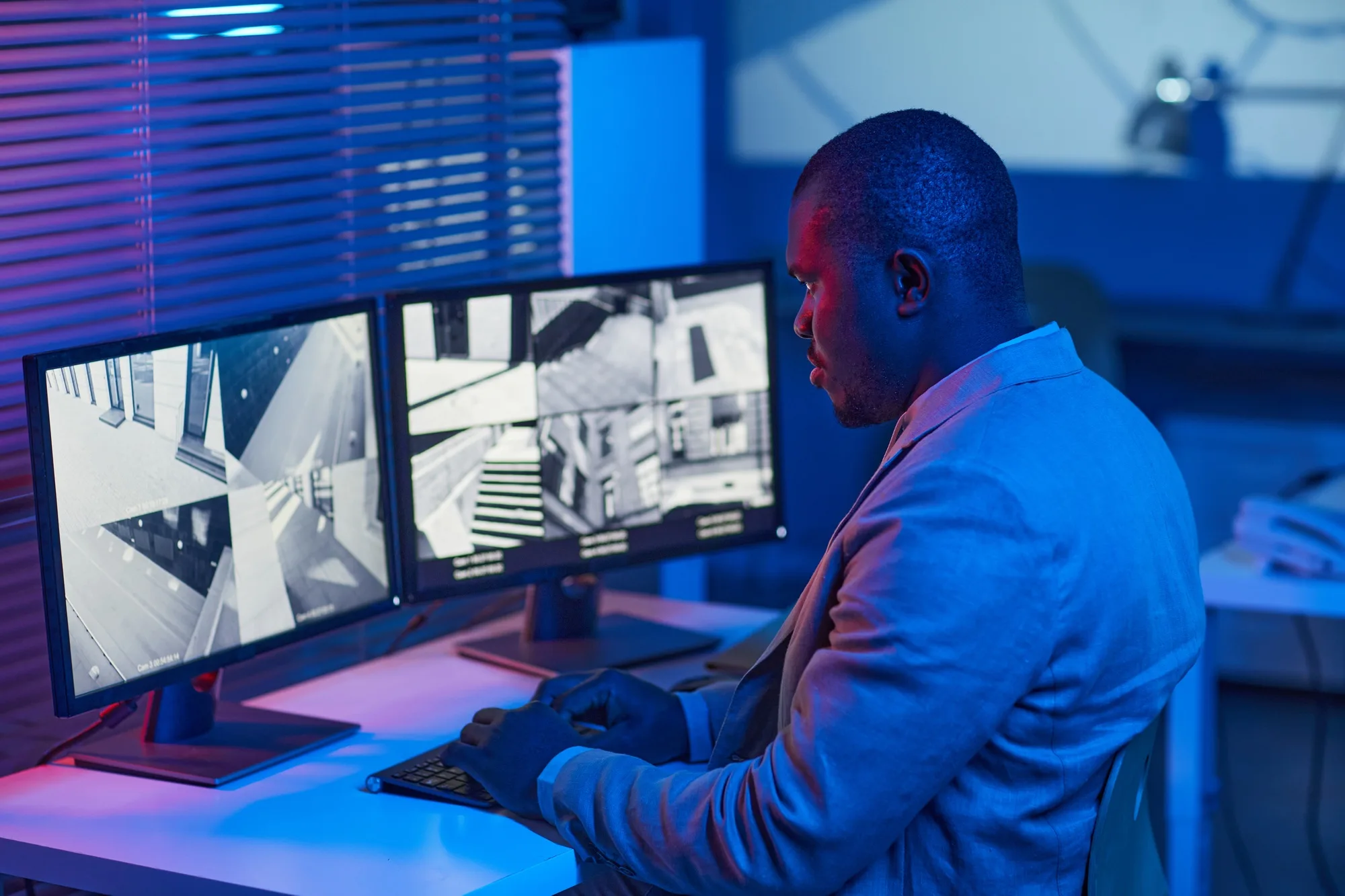
Most Australians move through their day without thinking about the digital trail they leave behind. A phone in a pocket, a tap of a transit card, a glance up at a camera in a car park. None of it feels significant in the moment. But the data produced by ordinary daily activity has become one of the most significant resources available to criminal investigators.
Law enforcement agencies in Australia now have access to tools that would have been unimaginable a generation ago. AI-assisted analysis, facial recognition software, and large-scale data matching have expanded what is possible in a criminal investigation and, in many cases, contributed to outcomes that traditional methods alone could not have achieved.
That capability comes with genuine questions. When automated systems influence who falls under investigative scrutiny, or when algorithm-generated outputs help shape the direction of a case, the accuracy and transparency of those systems matter to police, to courts, and to the individuals involved. The challenge is not whether these technologies are useful. It is how the law ensures they are used in ways that are reliable, proportionate, and open to independent scrutiny.
Key Takeaways
- Most Australians generate detailed digital records through everyday activity, records that can become evidence in a criminal investigation.
- AI tools have made large-scale investigations faster and more effective, but automated outputs are not infallible and require independent human assessment.
- Facial recognition technology is actively used by police in Australia, with genuine public safety benefits alongside unresolved questions about accuracy and oversight.
- Digital records can be incomplete or misleading without context. A phone near a scene does not place its owner there.
- Australian courts require that electronic evidence be authenticated and shown to be reliable before it can be relied upon.
- As investigations become more technology-driven, understanding how digital evidence is gathered, tested, and challenged becomes increasingly important.
How Technology Has Changed Criminal Investigations
The Digital Footprint Most People Leave Behind
A traditional investigation relied on witness accounts, physical evidence, and detective work. Modern investigations still draw on all of those, but they are now supported by a substantial volume of electronic data that can reconstruct a person’s movements, communications, and associations with considerable precision.
CCTV footage from businesses, transport networks, and public spaces is routinely obtained and reviewed. Phone records can establish call history, messaging activity, and device location at specific times. Social media accounts and online activity are examined and preserved. Vehicle data from toll systems, traffic cameras, and GPS devices can place a person at a location in ways that were not previously available to investigators.
Most people generate this kind of data without thinking about it. Paying for parking, using a transit card, or simply carrying a phone produces records that can later become relevant to a criminal matter. The quantity of available data has grown rapidly, and Australian law enforcement agencies have developed both the technical tools and the legal mechanisms to access it.
Volume is not the same as clarity, however. A phone located near a scene does not place its owner there. A social media post has context that a screenshot cannot always convey. These distinctions matter, and they arise regularly when digital material is tested in criminal proceedings.
The Growing Role of AI in Policing and Investigations
AI tools in policing are primarily about scale. Investigators working on serious matters can face enormous quantities of raw data: hours of footage, thousands of messages, and financial records spanning months. Tools that reduce that volume to manageable leads save significant time and can surface connections that human analysts working alone might miss.
Video analysis software can scan hours of CCTV footage to identify specific vehicles, clothing, or movement patterns. Pattern recognition tools can map associations across large volumes of communications or transactions. Data matching systems can cross-reference records from multiple sources to build timelines or identify individuals relevant to an investigation. In cold cases and complex fraud matters, these tools have contributed to outcomes that might not have been reached otherwise.
The concern is not the capability itself but the weight placed on its outputs. When an algorithm flags a person of interest, that finding can shape the direction of an investigation. What evidence is gathered, who is interviewed, which threads are followed can all be influenced before anyone has independently checked whether the output is correct. Automated systems make assumptions. They reflect the quality of the data they were trained on. They can be wrong in ways that are not immediately visible.
AI can surface patterns that human investigators might miss. It can also surface patterns that do not exist.
How these tools are audited, what error rates are considered acceptable, and how their outputs are explained when they form part of a case against someone are questions that remain an active area of legal development in Australia. That process matters most when the stakes are highest.
Facial Recognition: Public Safety Tool or Privacy Risk?
A Technology with Genuine Uses and Unresolved Questions
Facial recognition has been used by Australian police to identify suspects in serious criminal matters, including cases where traditional identification methods produced no result. The technology can process large image databases quickly, and where it performs well, it gives investigators a lead they would not otherwise have had.
The debate around its use reflects the fact that it does not always perform well. These systems produce false positives, and accuracy varies depending on image quality, database coverage, and the demographic characteristics of the subject. Some groups are misidentified at higher rates than others, a disparity that raises questions about whether the technology operates consistently across the population it is used to identify.
A false match does not automatically lead to a wrongful outcome, but it can direct investigative attention toward the wrong person, influence which evidence is gathered, and shape decisions that take time to revisit. The further a misidentification travels through an investigation before it is caught, the more disruptive the correction tends to be.
Australia does not yet have comprehensive national legislation specifically governing police use of facial recognition in criminal investigations. Guidelines vary between jurisdictions, and deployment has generally moved faster than regulation. That gap is the subject of ongoing public debate. Not because the technology lacks legitimate uses, but because those uses raise questions about accuracy, consent, and the reach of biometric monitoring in public spaces that existing frameworks have not yet caught up with.
Can Technology Ever Be Completely Reliable?
Why Digital Evidence Still Needs Human Interpretation
Digital evidence carries a particular authority in the minds of many people. It was recorded by a machine, logged automatically, and generated without human involvement, which can make it feel more definitive than it actually is. In practice, what a digital record shows often depends heavily on the context surrounding it.
CCTV footage can be unclear, incomplete, or shot from an angle that makes reliable identification difficult. Location data shows where a device was detected by a network, not necessarily where its owner was standing. Metadata can be altered. AI-generated analysis reflects the assumptions built into the underlying model and the quality of the data it processed.
The integrity of any digital record also depends on how it was collected, stored, and handled between collection and use. A gap in that documented record, showing who had access to the material and when, can raise questions about whether the record has been altered or is complete. Courts expect that chain to be intact, and when it is not, it becomes a point of scrutiny.
Expert witnesses are regularly called in technology-driven cases to explain the limits of what a piece of digital evidence actually shows. That process is designed to ensure technical outputs are understood in context rather than accepted at face value, a safeguard that applies regardless of how authoritative the evidence initially appears.
The Expanding Scope of Surveillance
The range of devices that generate investigatively relevant data has expanded well beyond phones and CCTV cameras. Smart home devices, vehicles with onboard tracking, fitness wearables, and financial platforms all produce detailed records of daily behaviour, records that can, through lawful processes, be accessed by investigators.
Many Australians would be surprised by how much of their routine activity leaves a recoverable trace. A search query, a contactless payment, a route taken on a navigation app. None of these feels like evidence at the time. In the context of a criminal investigation, they can become exactly that.
In many cases, access to this data is justified. Serious investigations benefit from it, and the warrant and authorisation requirements that govern access exist precisely to ensure that benefit is weighed against the intrusion involved. Those controls are meaningful, but they were largely designed before the current volume and variety of data collection existed. Whether they remain calibrated to the scale of what is now accessible is a question legislators and courts are actively working through.
Balancing Crime Prevention and Civil Liberties
Where Should the Line Be Drawn?
Digital and AI-assisted tools have contributed to the resolution of serious cases, including violent offences, fraud, and organised crime, that would have been significantly harder to investigate through traditional means. That record is a genuine part of the picture, and any honest assessment of these technologies has to include it.
At the same time, a justice system that uses powerful surveillance and automated analysis without sufficient accountability creates risks of its own. When automated tools get things wrong, the consequences are not evenly distributed. People without strong legal representation may not be well placed to identify limitations in the technical evidence presented against them, or to know what questions to ask about how it was produced.
The safeguards built into the system are not obstacles to effective policing. They are what keep it honest. Warrants, evidentiary rules, the right to test the case against you through cross-examination, and judicial discretion over what gets admitted all serve that purpose. Proportionality runs through all of them. Courts assess not just whether investigators had the power to do something, but whether doing it in the way they did was justified, given what was at stake.
The line between effective policing and disproportionate surveillance is not fixed. It shifts as technology becomes more capable, more widely deployed, and more deeply embedded in everyday life. Keeping it in the right place requires ongoing attention from courts, legislators, and the broader community, not a one-time determination.
The Role of Criminal Defence Lawyers in the Digital Age
As investigations become more technology-driven, the skills required to respond to them have evolved accordingly. Understanding how digital evidence was gathered, whether the tools used to collect and analyse it operated correctly in the circumstances of a particular case, and whether the conclusions drawn from it hold up under scrutiny are now core parts of criminal defence work.
Technical evidence that looks straightforward on its face can carry significant limitations: gaps in the record of how it was handled, methodological assumptions that do not apply to the facts of a specific case, or outputs presented without the context needed to interpret them properly. CCTV placing someone near a location is not the same as placing them at it. A flag thrown up by an algorithm reflects what the model was built to find, not necessarily what happened.
As investigations become increasingly technology-driven, obtaining advice from an experienced criminal defence lawyer can be critical in understanding how digital evidence was gathered, how it is likely to be used, and where it may be open to challenge.
A fair process depends on evidence being properly tested, including evidence that comes wrapped in the apparent authority of technology. That scrutiny is part of what effective criminal defence representation provides.
Conclusion
AI and surveillance technologies have become a substantive part of how criminal investigations are conducted in Australia. The tools available to investigators are more powerful than they have ever been, and the range of data that can be drawn into a case continues to grow.
That brings real benefits. Serious matters that would once have gone unresolved are now being investigated and, in many cases, prosecuted with evidence that simply did not exist before. At the same time, the accuracy of the tools used to gather and analyse that evidence, the transparency of how they work, and the adequacy of the rules that govern them are not settled questions.
The justice system’s existing mechanisms, oversight requirements, evidentiary standards, and the rights of accused persons to test the case against them were built for a different investigative environment. Extending them to cover AI-assisted analysis, biometric identification, and large-scale data collection is work that remains genuinely unfinished.
The question is not whether these technologies will keep advancing. It is whether the rules for testing their outputs will keep pace.