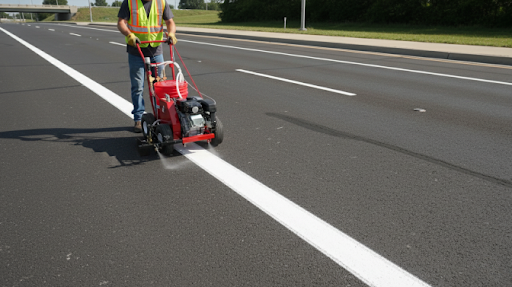
Efficient traffic management depends heavily on visibility and organization. Clear, well-defined road markings are vital to guiding drivers, enhancing safety, and optimizing roadway flow. Over time, exposure to weather, heavy traffic, and environmental wear leads to faded or obscured lines, increasing the risk of confusion and accidents. This is where a striping machine becomes indispensable. Designed for precision, speed, and consistency, these machines ensure professional-grade markings that withstand long-term use and environmental challenges.
The Role of Road Markings in Traffic Safety
Road markings are the silent regulators of transportation systems. They define lanes, direct movement, and provide essential visual cues for drivers. Consistent, noticeable markings reduce uncertainty and improve traffic flow by delineating pedestrian, cyclist, and vehicle zones.
However, the effectiveness of these markings depends on their clarity and durability. When they fade or wear away, the potential for collisions increases significantly. Utilizing advanced striping machines ensures markings are applied accurately and uniformly, improving driver awareness and maintaining compliance with traffic safety standards.
Precision and Efficiency in Application
Modern striping machines are engineered to deliver unmatched precision, allowing professionals to apply lines that are straight, uniform, and consistent in thickness. This precision reduces material waste and guarantees optimal paint utilization. Equipped with adjustable spray systems, these machines can adapt to a wide range of surfaces, from highways and parking lots to airport runways and athletic fields.
The time-saving advantage of these machines cannot be overstated. Their efficiency allows large areas to be covered in significantly less time compared to manual methods. This leads to faster project completion, reduced labor requirements, and minimal disruption to public spaces.
Technological Advancements and Operational Benefits
Today’s professional-grade striping equipment integrates technology to enhance performance. Features such as laser-guided alignment, automatic pressure control, and GPS mapping contribute to exceptional accuracy and productivity. The result is a superior finish that meets both aesthetic and functional standards.
Professionals considering the best operational setup should know the difference between robotic and manual striping machines to determine which delivers greater efficiency for their specific needs. Both options have distinct advantages. Robotic machines provide automation and consistency across large-scale projects, while manual machines offer adaptability and control for smaller or complex layouts.
Cost Efficiency and Long-Term Value
Investing in professional striping equipment offers significant long-term value. The precision and durability of the applied markings reduce the need for frequent reapplication, lowering overall maintenance costs. Additionally, consistent line quality minimizes liability risks associated with unclear or faded markings. High-performance striping machines are built to withstand heavy use, providing years of reliable service. Their design ensures easy maintenance, quick part replacement, and minimal downtime, all of which contribute to operational cost savings.
Environmental and Material Advantages
Many modern machines support eco-friendly paints and coatings, aligning with sustainability initiatives. Low-VOC (volatile organic compound) and water-based paints are now compatible with professional striping systems, reducing environmental impact without compromising performance. In addition, efficient application systems minimize overspray and material waste. This not only improves environmental compliance but also enhances job-site cleanliness and efficiency, which are crucial in urban and high-traffic environments.
Versatility Across Applications
The utility of a striping machine extends beyond roads. These machines are widely used for marking parking lots, industrial zones, sports complexes, and airport taxiways. Their flexibility makes them an asset across multiple industries where precision and visibility are paramount. Different machine models cater to varying project scales, ensuring professionals can select the most appropriate equipment for the task at hand. Whether it’s maintaining city streets or defining lanes in commercial complexes, the adaptability of striping technology ensures consistent quality and professional results.
Conclusion
A striping machine is an indispensable tool in maintaining road safety, traffic organization, and aesthetic quality. Its precision, efficiency, and adaptability make it a cornerstone of professional marking operations across industries. With the integration of advanced technologies and sustainable materials, these machines continue to redefine standards in visibility and performance. For professionals dedicated to maintaining safe and efficient environments, investing in modern striping technology ensures reliability, compliance, and excellence in every application.
For maintaining clear and safe road conditions, it’s crucial to not only focus on striping machines but also ensure prompt response to potential hazards such as water damage. Learn more about the risks of ignoring water damage.