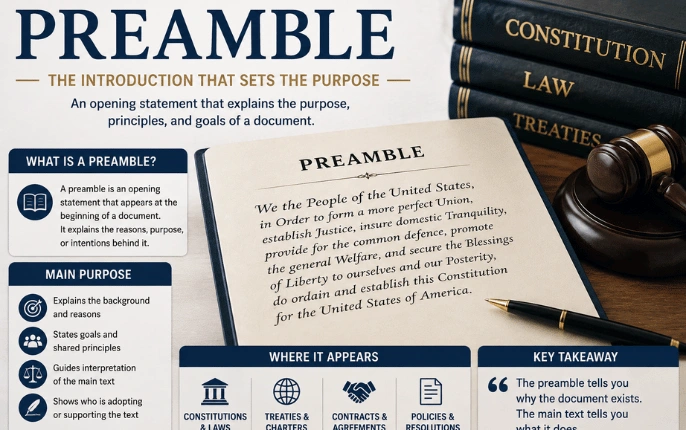
A preamble is an opening statement that introduces a document, explains why it exists, and may state the principles or goals behind it. In constitutions, statutes, treaties, contracts, and resolutions, this opening language gives readers context. It usually guides interpretation rather than creating the document’s operative rules by itself.
| At a glance | What to know |
| Basic meaning | An opening statement before the main text |
| Main purpose | Provides context, purpose, goals, or guiding principles |
| Common uses | Constitutions, laws, treaties, contracts, and resolutions |
| Legal effect | Often helps with interpretation rather than creating rules by itself. |
| Best reading question | “What is this document trying to achieve?” |
| Related terms | Introduction, preface, prologue, and recitals |
What Does “Preamble” Mean?
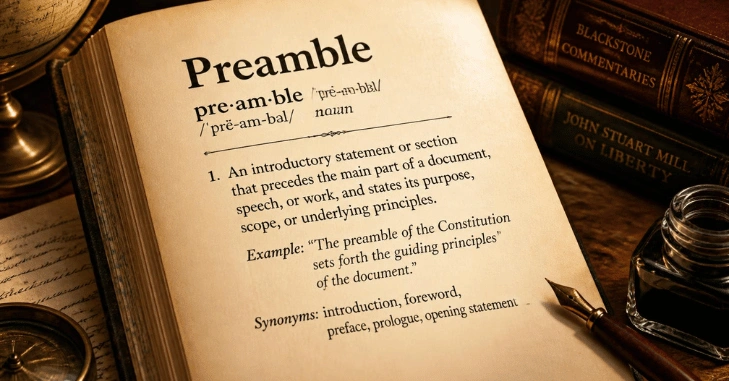
A preamble is an introductory statement, especially one that appears at the beginning of a constitution, statute, agreement, or other formal document. It often explains the reasons, purpose, or intentions behind the text.
The term can also have a broader meaning. In everyday writing or speech, it may refer to an introduction that prepares the reader or listener for what comes next.
That broad meaning explains why you can encounter this type of opening in many settings. In everyday writing, it prepares the reader for what follows. In formal documents, it may identify the people behind the text, explain a problem, state shared values, or describe the document’s goals.
What Job Does an Opening Statement Do?
An introductory section gives readers the “why” before the rules or details. Its exact function depends on the document, but it commonly does five things:
- Explains the background that led to the document.
- States the goals the writers hope to achieve.
- Identifies shared values or principles.
- Shows who is adopting or supporting the text.
- Gives courts, officials, or readers context for interpreting later provisions.
This context can be useful when formal language becomes difficult to interpret. You can often understand what the writers were trying to accomplish before reading the detailed clauses.
Where Do You Find This Kind of Opening?
Constitutions and Laws
Constitutions are among the most familiar examples. The opening of a constitution can set the stage by communicating the intentions and purposes behind the document.
For example, the opening of the U.S. Constitution explains broad goals before the document moves into the powers, structures, and rules of government. The introductory language provides context, but it does not independently define every government power or individual right.
Readers interested in similar legal concepts can browse Webivest’s Law section for more plain-language explanations of legal topics.
Treaties and International Charters
International agreements can begin similarly. Their introductory language may state broad aims before moving into formal articles, duties, or procedures.
Such openings can frame ideas such as peace, human rights, justice, cooperation, or shared responsibilities. They help readers understand the goals that influenced the document’s creation.
Contracts and Formal Resolutions
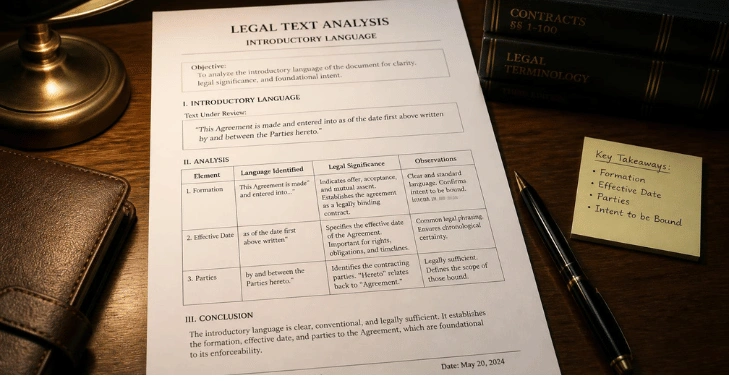
Contracts may contain introductory wording that identifies the parties, explains their relationship, or records the purpose of the agreement.
Formal resolutions can also use background clauses before stating what an organization has decided to do. In both cases, the opening provides context for the more specific provisions that follow.
If you are learning how formal documents work, Webivest’s guide to notary services and document verification provides related context about signatures, identity checks, and legal paperwork.
Does Introductory Language Have Legal Force?
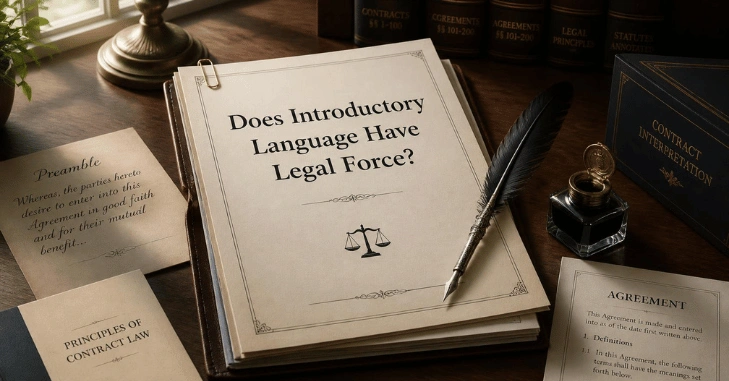
Usually, the opening language is not a standalone source of legal power.
In legal interpretation, introductory wording may help explain a document’s purpose or clarify competing interpretations. However, it generally does not override the operative provisions that contain specific rights, duties, powers, or restrictions.
The same distinction often appears in treaties, statutes, contracts, and other formal documents. Introductory material provides context, while binding duties are normally found in the operative provisions.
The precise legal effect can still depend on the document and the legal system involved. When specific rights, duties, or disputes matter, check the operative clauses and seek appropriate legal advice when necessary.
Opening Statements vs. Prefaces, Introductions, and Prologues
These terms all describe material that comes before something else, but they are not interchangeable.
| Term | Common setting | Main function |
| Opening statement | Law, policy, and agreements | Explains context, purpose, or guiding principles |
| Preface | Mainly nonfiction books | Explains why or how the book was created |
| Introduction | Books, reports, and articles | Introduces the subject and prepares the reader |
| Prologue | Fiction and drama | Provides narrative background before the main story |
A preface is commonly associated with books and often explains how or why the work was created. An introduction usually prepares readers for the main subject matter.
The correct term depends on both the type of document and the job the opening section performs.
A Simple Example Shows the Difference
Imagine that a community group adopts a new event-safety policy.
Its opening language might say:
“Because our events now serve larger crowds, the organization wants consistent safety procedures for volunteers.”
That sentence explains the reason for the policy. It provides context but does not tell anyone exactly what they must do.
A later rule might state:
“Every public event must have two trained safety volunteers on site.”
Now the language creates a specific requirement.
This distinction gives you a useful reading test: separate the document’s explanation from its commands. The opening tells you why the text exists. The operative provisions tell you what people must, may, or cannot do.
How to Read a Preamble in About 30 Seconds

You do not need legal training to identify the main point of introductory wording. Use this quick method:
- Identify the document type. A constitution, contract, treaty, or policy may use its opening differently.
- Find who is speaking. Look for the people, government, organization, or parties adopting the text.
- Spot purpose words. Terms such as “establish,” “protect,” “promote,” “agree,” and “ensure” often reveal the goals.
- Separate principles from rules. Values and background usually frame the document, while operative clauses contain specific duties.
- Check the main text. If you need to know a legal right or obligation, confirm it in the actual articles, sections, or clauses.
This approach helps you understand the document’s direction before working through its detailed language.
Frequently Asked Questions
A preamble is often not legally binding by itself. It may provide context for interpreting a document, but specific rights, powers, duties, and obligations are generally established in the operative provisions.
An opening statement can explain the document’s purpose, identify the source of authority, and express the principles behind the government being created.
Yes. Contracts often begin with background information about the parties, their relationship, or the reason for the agreement. The enforceable obligations usually appear in the operative clauses rather than in the introductory material.
No. A preface is most commonly associated with books and is usually written to explain the background, purpose, or creation of the work. Formal introductory language in a legal or governing document serves a different purpose by framing the document’s goals, context, or principles.